

Finding a place to live is one of the first real tests of navigating Japan as a foreigner, and for nurses arriving with a new job offer, the pressure is often doubled. You need housing sorted before your start date, and the rental process in Japan is not a quick one. There are agents, landlords, guarantor companies, and ward offices involved—and at nearly every stage, a hanko is expected.
Rental paperwork in Japan is thorough by international standards. A standard lease agreement can run to multiple pages, each requiring a personal seal in designated fields. If you arrive unprepared, the process stalls. Agents reschedule. Landlords move on. For foreign nurses who are often working against a tight pre-employment timeline, a missing hanko is the kind of small logistical gap that causes outsized delays.
This guide explains exactly why nurses face hanko requirements in rental contexts, which documents are involved, what type of seal to order, and how to get it done efficiently in English. Whether you are renting independently or moving into employer-arranged accommodation, the information here will help you move through the paperwork without unnecessary friction.
Why This Segment Is Asked for a Seal

Japanese rental agreements are legally binding contracts, and in Japanese legal culture, a personal seal carries the weight that a handwritten signature does in many other countries. The hanko functions as a formal mark of acknowledgment and agreement—a signal that you, specifically, have reviewed and accepted the terms.
In the rental context, this matters more than it might seem. A lease agreement in Japan typically involves not just the tenant but also a guarantor (hoshounin) and sometimes a guarantor company (hoshougaisha). Each party stamps the relevant sections of the contract. The landlord stamps theirs. The real estate agent stamps theirs. As the tenant, you are expected to do the same.
For foreign nurses, this process often comes with an added layer of complexity. Many landlords in Japan remain cautious about renting to foreign nationals, particularly those on fixed-term employment contracts. Working with a real estate agent who handles foreigner applications helps, but it does not eliminate the paperwork. If anything, the documentation tends to be more thorough, not less, when the tenant is a foreign national—which means more hanko fields, not fewer.
There is also the employer-arranged housing dimension. Many hospitals and care facilities offer dormitory accommodation or maintain contracts with specific apartment buildings for their nursing staff. Even in these cases, you will typically be asked to sign and stamp an internal housing agreement with the hospital, a separate lease with the building management, or both. The hanko requirement does not disappear because your employer is involved in the arrangement.
Common Documents and Timelines
Rental paperwork in Japan follows a fairly consistent sequence, and the hanko appears at multiple points. Here is a realistic breakdown of where it comes up:
During the application phase:
- Rental application form (chinshaku moushikomisho) — some agencies include a hanko field here, though not all
- Personal information consent form — commonly required by real estate agencies handling foreign applicants
At contract signing:
- Lease agreement (chinshaku keiyakusho) — this is the main document, and it almost always includes a hanko field for the tenant
- Important matters explanation (juuyou jikou setsumei) — a mandatory disclosure document that tenants acknowledge; hanko field is standard
- Guarantor agreement, if a personal guarantor is used — the guarantor also stamps, but you may need to stamp as the primary tenant on the same document
After moving in:
- Resident registration (juuminhyo) at the ward office — some municipalities include a hanko field on registration forms, though this varies
- Utility setup forms — gas, electricity, and internet providers occasionally include hanko fields on paper setup forms, particularly for automatic payment authorization
A realistic scenario: your hospital confirms your start date, and you have three weeks to find housing and move in. Your real estate agent schedules a contract signing appointment for the following week. The lease agreement arrives as a multi-page document. You need your hanko ready for that appointment. If you ordered it before leaving your home country or immediately on landing, you arrive prepared. If you have not ordered yet, you are asking the agent to reschedule.
A second scenario: your hospital arranges dormitory housing for you. You assume this means the paperwork is handled. On your first day, HR hands you a housing agreement to review and stamp. The form has two hanko fields. Without a seal, you cannot complete it.
If you are still looking for the right role, ComfysCareer is a solid starting point for foreigner-friendly jobs in Japan.
Common mistakes at this stage:
- Assuming a signature substitute will be accepted. Some real estate agents will allow it; many will not. The safest assumption is that a hanko is required until confirmed otherwise.
- Using a 100-yen shop mass-produced stamp. These are not accepted for legal contracts. You need a carved personal inkan with your name.
- Ordering a hanko that does not match your residence card name. Your lease will be registered under the name on your residence card, and the hanko should be consistent with it.
- Waiting until the contract signing appointment to think about the hanko. By that point, you have no buffer.
- Borrowing a friend’s hanko. Every hanko used on a legal contract should belong to the person whose name appears in the signatory field.
Recommended Hanko Type and Size
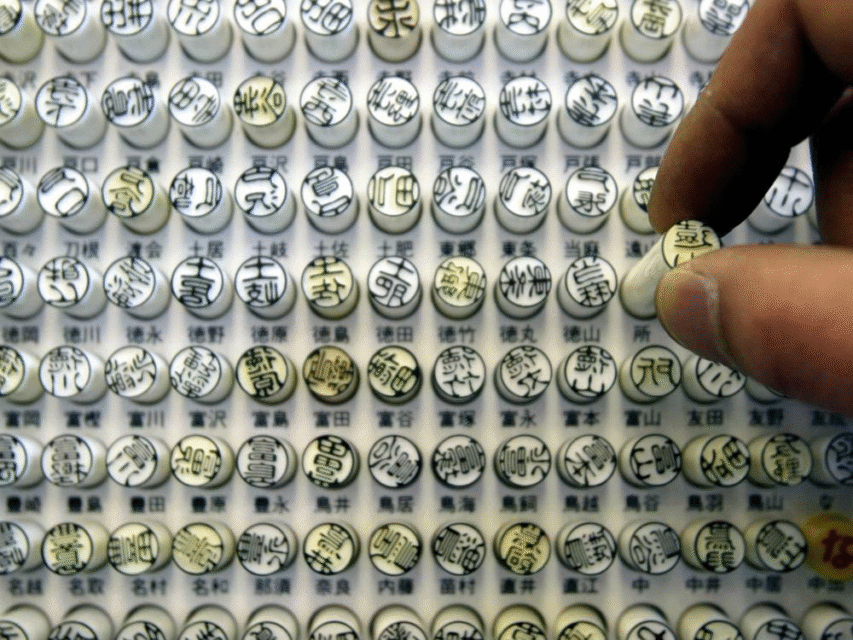
For rental paperwork, a mitome-in (認め印) is appropriate in most cases. This is a standard personal seal that does not require formal registration with the ward office. It is the default for everyday contracts and agreements, including lease documents.
A jitsuin (実印)—a formally registered seal—is generally not required for standard rental agreements. If you are ever asked for one, your real estate agent will specify this clearly. For the vast majority of nursing accommodation situations, a mitome-in is sufficient.
Size: 10.5mm to 12mm is the standard personal seal range. For rental documents, 10.5mm or 11mm is practical. The stamp fields on Japanese contract documents are designed around this size.
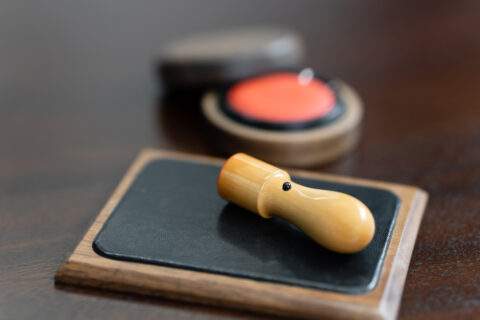
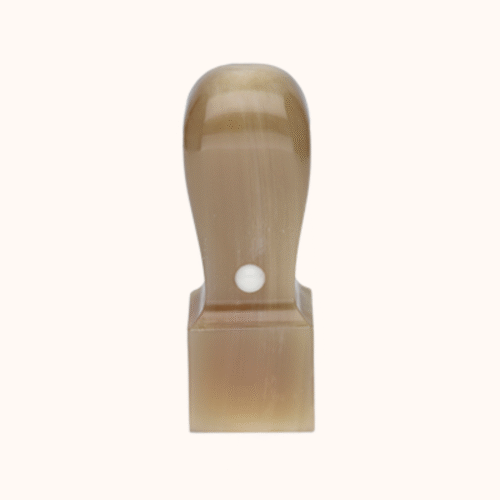
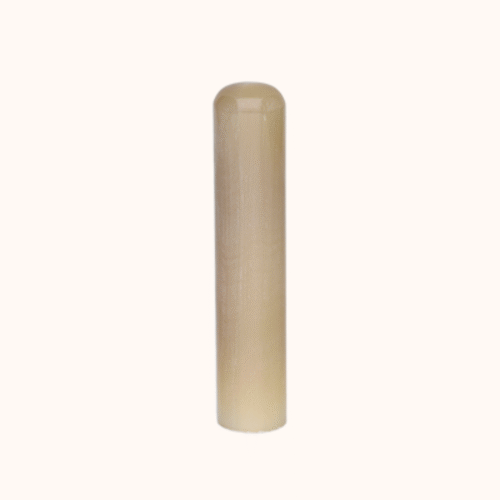
Material: For a seal you will use across multiple high-stakes documents—lease agreements, employment contracts, banking forms—a durable material is a worthwhile investment. Resin and acrylic options handle everyday use well, but harder materials like Japanese cherry wood (yamato) or black buffalo horn (tsuno) maintain a cleaner impression over time and hold up better with repeated use.
Name format: Your hanko must reflect the name under which your lease will be registered, which is the name on your residence card. For foreign nationals, this is almost always a katakana rendering of your name. Confirm the exact katakana spelling before ordering—small phonetic variations can create inconsistencies between your hanko, your residence card, and your lease document that may require correction later.
If your name is particularly long or has an unusual phonetic structure in Japanese, a layout adjustment may be needed. Reputable hanko services can advise on how to arrange longer names legibly within a standard seal diameter.
Ordering Tips in English
HankoHub provides a fully English-language ordering process designed for foreigners in Japan. You enter your name, select your preferred script (katakana for most foreign nationals), choose size and material, review a design preview, and confirm. No Japanese required at any stage.
For nurses who need their hanko ready before rental paperwork begins, timing is the most important consideration:
- Order before you travel if possible. If you have a confirmed job offer and a rough move-in timeline, ordering from your home country gives you the most lead time. HankoHub ships internationally, so this is straightforward.
- If ordering after arrival, do it on day one. Do not wait until your real estate agent contacts you about a contract signing appointment. By that point, you may have only a few days.
- Use your residence card as the name reference. Once you have it, this is the authoritative document for what your hanko should say. If you are ordering before arrival, use the name as it appears on your passport and confirm the katakana once you have your residence card.
- Review the design preview carefully. Confirm that the name layout and script are exactly right before production begins.
- Consider ordering a second hanko. Many nurses working in Japan find it practical to have one clean, dedicated seal for official documents—rental agreements, banking, contracts—and a second for lower-stakes daily use. It keeps the primary seal in better condition.
If you are unsure how your foreign name translates into katakana, HankoHub offers name conversion support as part of the ordering process.
FAQ
Is a hanko legally required to sign a rental agreement in Japan? Not in a strict legal sense—Japanese contract law does not mandate a seal over a signature. However, in practice, most real estate agencies and landlords expect a hanko on lease documents, and many will not proceed without one. Treating it as required is the practical approach.
My hospital is arranging my accommodation. Do I still need a hanko? Likely yes. Even when employers arrange housing, there is typically an internal housing agreement or a lease co-signed by the tenant that includes hanko fields. Ask your HR contact what is required before assuming it is fully handled for you.
Can I use romaji on my hanko for rental documents? Technically possible, but katakana is considerably more standard in Japanese administrative and legal contexts. If your name appears in katakana on your residence card—which it typically does for foreign nationals—your hanko should match. Romaji hanko are sometimes accepted, but they can raise questions at some agencies and branches.
What if my name changes after I sign the lease? A name change—due to marriage or other legal reasons—requires updating your official documents, including your residence card. Your lease would also need to be updated to reflect the change. You would need a new hanko matching the updated name.
I am staying in a guest house or sharehouse short-term. Do I need a hanko? Short-term shared accommodation in Japan often uses simplified contracts that do not require a hanko, particularly if the operator is accustomed to foreign residents. However, this varies by operator. It is worth asking before your check-in date. If you are transitioning to independent rental later, you will need one then.
What if I lose my hanko after signing the lease? For rental purposes, losing your hanko after the lease is signed has limited immediate impact—the contract is already executed. However, you will need a functioning hanko for future documents, including lease renewals, so replacing it promptly is advisable. Order a replacement that matches the original design as closely as possible.
Next Steps

If you have a rental appointment coming up—or a start date close enough that housing needs to be sorted soon—take care of the hanko now rather than at the last minute. Visit HankoHub, enter your name as it appears on your residence card or passport, choose a size and material that suits long-term official use, and place your order. Arriving at a contract signing with your hanko ready is a small thing that makes a real difference in how smoothly the whole process goes.